


LSU Helped Build Louisiana’s Crawfish Industry; Now It’s Shaping a More-Resilient Future
April 07, 2026
The crawfish industry that Louisiana depends on today didn’t just grow organically—it was built, in large part, through decades of LSU research. Now, as new challenges emerge—from extreme weather to evolving biological threats—that same institution is helping shape what comes next.
Kaelyn Fogelman, a recently hired professor of aquaculture at the LSU AgCenter, is helping lead the charge as LSU builds on its crawfish research legacy to address those challenges.
“I came to LSU to do aquaculture and have a world-class aquaculture program,” Fogelman said. “I knew that when I took my permanent professor position, that’s where I wanted to be forever. I wanted to be at a university with a program that wanted to grow and had the opportunity to do that.”
A Way of Life in Louisiana


In Louisiana, crawfish are more than a seasonal delicacy—they are a cornerstone of the state’s culture, economy, and identity. The industry produces well over 100 million pounds annually and contributes hundreds of millions of dollars to the state economy.
Aquaculture professor Greg Lutz joined the LSU faculty in 1991 and has been deeply embedded in building the university’s crawfish research credentials. His current responsibilities include state-wide extension efforts for all commercial aquaculture.
“Since the earliest days of the industry, LSU and the LSU AgCenter have been involved with the growth of crawfish aquaculture,” he said. “Farm visits, local and regional workshops, producer meetings, industry support, and written materials have all been instrumental in the industry’s expansion.”
Blueprint for Modern Crawfish Farming
Long before crawfish became a statewide economic engine and cultural staple, Louisiana producers faced a fundamental challenge: how to farm a species that was still largely understood through tradition rather than science.
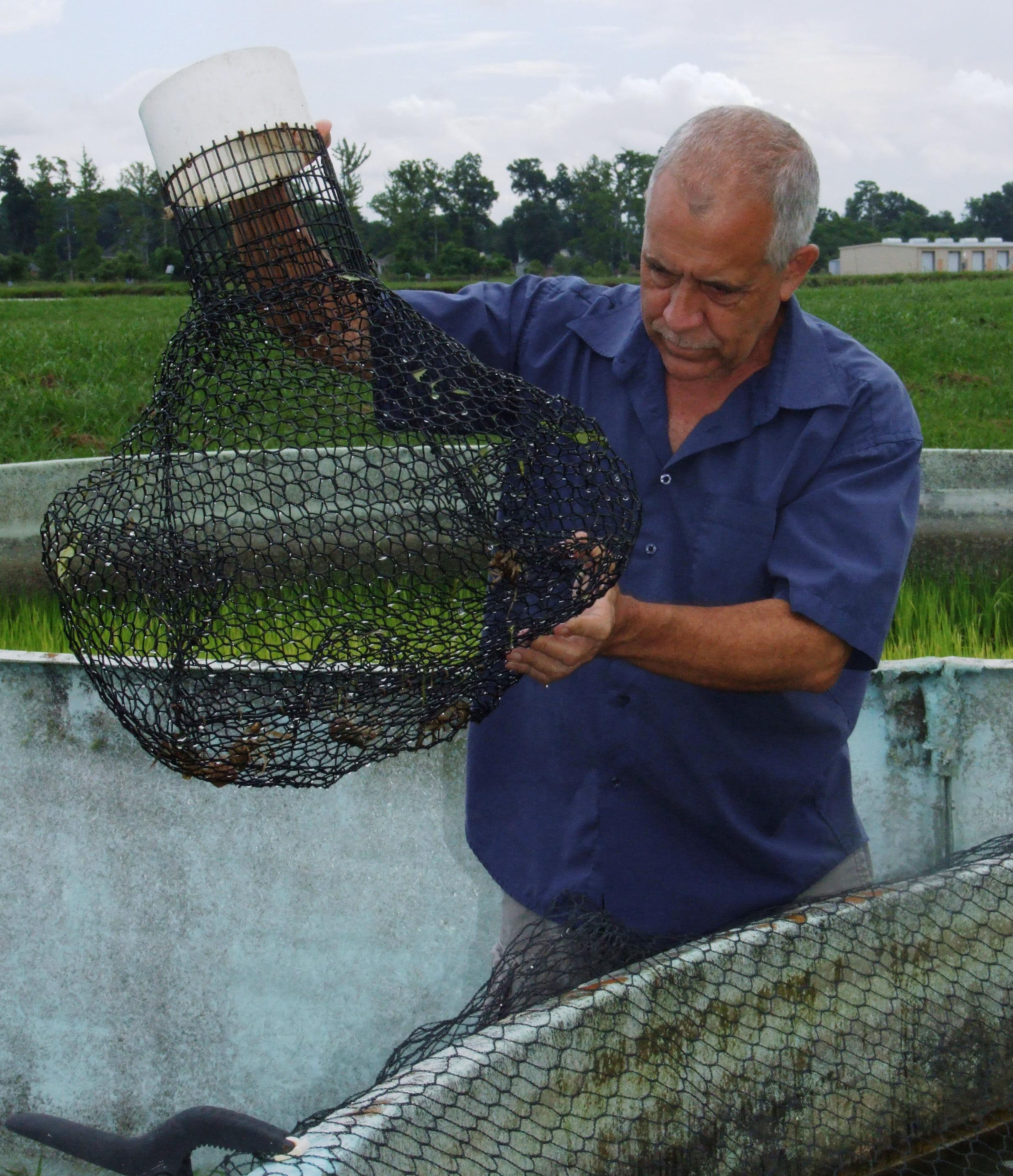
LSU aquaculture professor Greg Lutz checks a crawfish trap.
Over several decades, LSU researchers helped transform crawfish production from a fragmented practice into a highly coordinated agricultural system—one that still defines the industry today.
Most production practices currently in use were established between 1970 and 2010 through research at LSU and the LSU AgCenter. Lutz said innovations included water management, harvesting strategies, and forage-based production, in which plants are grown and managed to support an underwater food web that feeds crawfish.
One example is the now-common practice of using rice fields in the off-season to produce crawfish as a complementary crop that boosts farmers’ bottom lines. The rice harvest in late summer leaves behind stubble as forage for crawfish.
Such time-tested practices—many of them outlined in the AgCenter Crawfish Best Management Practices, first published in 2003—allowed the industry to scale statewide and led to Louisiana's dominance in U.S. crawfish production.
“The system worked—so well that for a time, it seemed like most of the major questions had been answered,” Fogelman said. But the conditions that once made crawfish farming predictable are becoming less reliable.
New Pressures on a Proven System
Increasingly volatile weather patterns, emerging diseases, and environmental pressures are testing a system designed for a different era—revealing just how vulnerable even a well-established industry can be.
“Crawfish farmers are already at the mercy of Mother Nature’s weather patterns—perhaps even more so than many other agricultural sectors,” Lutz said. “Low profit margins limit their response options.”
Increasingly frequent Arctic blasts can delay crawfish growth and, therefore, harvests. “Freezing temperatures also impact the vegetation producers rely on to fuel the natural food chains in their ponds, resulting in reduced size late in the season,” Lutz said.
And in the face of dry, hot conditions—Louisiana experienced a significant drought in 2023—options to maintain soil moisture are limited and can be costly.
“The unusual weather in the summer of 2023 showed us that unusually high temperatures can weaken and kill crawfish even when they are down in the ground,” Lutz said.
Biological threats, such as white spot syndrome virus, a crustacean disease that can drastically reduce harvests in some ponds, and invasive species such as apple snails, are spurring research from several angles to find solutions.
As these challenges intensified, so did funding constraints and infrastructure setbacks, leading to the departure or retirement of some LSU foundational experts, slowing the research engine that powered innovation in the crawfish industry.
Next Generation of Crawfish Production
Today, amid pressing needs in the crawfish industry, LSU is renewing its commitment to addressing them by rethinking what crawfish research can become. Fogelman said it’s a privilege to follow the legacy of crawfish research at LSU and help guide its future.
“We are going system by system and building by building,” she said. “It’s definitely a labor of love, but there are a lot of people working together for it.”
If the first era of crawfish research was about understanding how to farm the species, the next will be about optimizing it—using science to make production more resilient, more predictable, and better suited to an increasingly uncertain environment.
For one, LSU crawfish researchers are looking at commodities such as rice and sugarcane, which depend on research to develop lines or strains that are most resilient to the conditions where Louisiana farmers grow them. For example, a sugarcane strain developed at LSU to grow in central Louisiana can better withstand the cold weather common there.
“If we use that model, we know exactly what to do for crawfish,” Fogelman said.
Currently, the LSU AgCenter Aquatic Germplasm and Genetic Resources Center is working to preserve crawfish genetics —including cryogenic storage of reproductive material—as a safeguard for the industry should a catastrophic season wipe out large portions of the crawfish population.
But this work also opens the door to selectively strengthening desirable traits, such as faster growth or greater resilience to environmental stress.
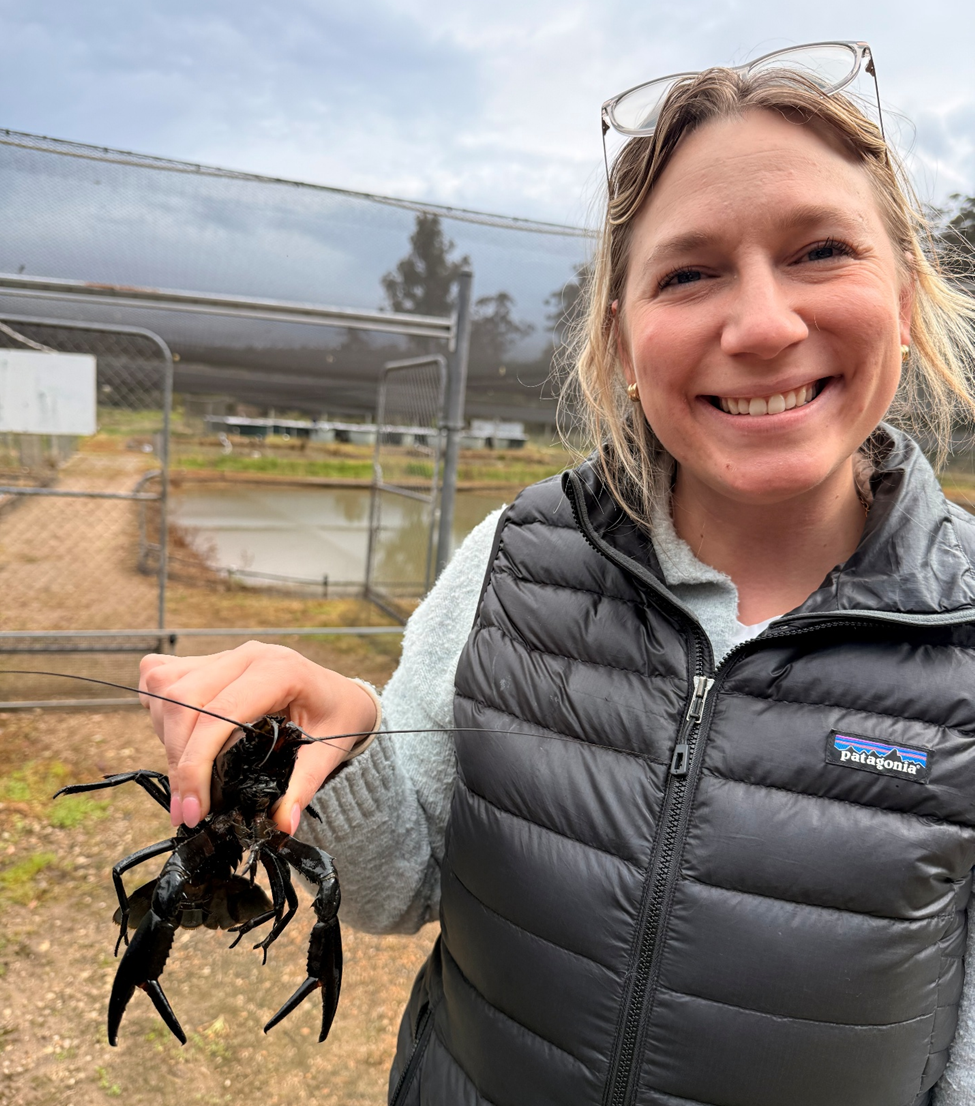
LSU aquaculture professor Kaelyn Fogelman with Cherax cainii (Smooth Marron), a native crayfish, at a federal Western Australia hatchery in October 2025 during an international trip with burrowing-crayfish researchers from Auburn University and Edith Cowan University.
You Say Crawfish; They Say Crayfish
When LSU aquaculture professor Kaelyn Fogelman heard LSU was hiring for an aquaculture role, she was interested. When she learned they were specifically looking for a crawfish person, she was sold.
“Yeah, this is my dream job,” she said. “It seems like a position had been created for me by the universe … and to have it be in a crawfish-centered area culturally, economically, well, this is where I was meant to be.”
Her fellow members of the International Association of Astacology, the leading global organization for freshwater crayfish research, would likely agree.
And you read that correctly: Crayfish. Fogelman can explain.
“When we say crawfish, that's the red swamp variety that we produce and eat,” she said. “When we say crayfish, that's all the other species in the world. As a scientific group, we refer to them as crayfish.”
Still not convinced?
“Red swamp crawfish is one species,” she continued. “It's a species that we farm, but we do have 39 known species within the state of Louisiana. So, we have one crawfish, a lot of crayfish, and they are all very ecologically important.”
In fact, Fogelman said that more than half of the world's crayfish species are at risk of extinction, a devastating realization that helped motivate her to devote much of her time to researching them.
She calls the red swamp crawfish our most iconic and culturally important—and the world’s most studied—crayfish.
“Anything we figure out that helps with the biology and our better understanding of red swamp, that information also helps fill knowledge gaps (for other species),” she said.
“So, this allows us to have this synergy for thinking about our fisheries and aquaculture program as a whole when we are studying this commercially important species. That's all information that helps us conserve our native species as well, that are often overlooked and understudied.”
Crayfish. Who knew?
Other promising areas of interest, according to Lutz, include managing water depth to offset cold-weather impacts, automated harvesting methods, and integrated pest management approaches.
Also, Fogelman is focusing on using water aeration systems to determine how much dissolved oxygen is needed in the water for crawfish to be most productive, placing juvenile crawfish in environments with varying levels of aeration for comparison.
“We can't really control the temperature, but if there's a way we could provide them more oxygen, that could limit some of that stress and still provide oxygen in support of all those energetic processes that they need,” she said.
The key is finding the optimal sweet spot where a small investment in aeration could yield higher, more predictable returns for crawfish farmers, she said.
Learning the Principles of Aquaculture
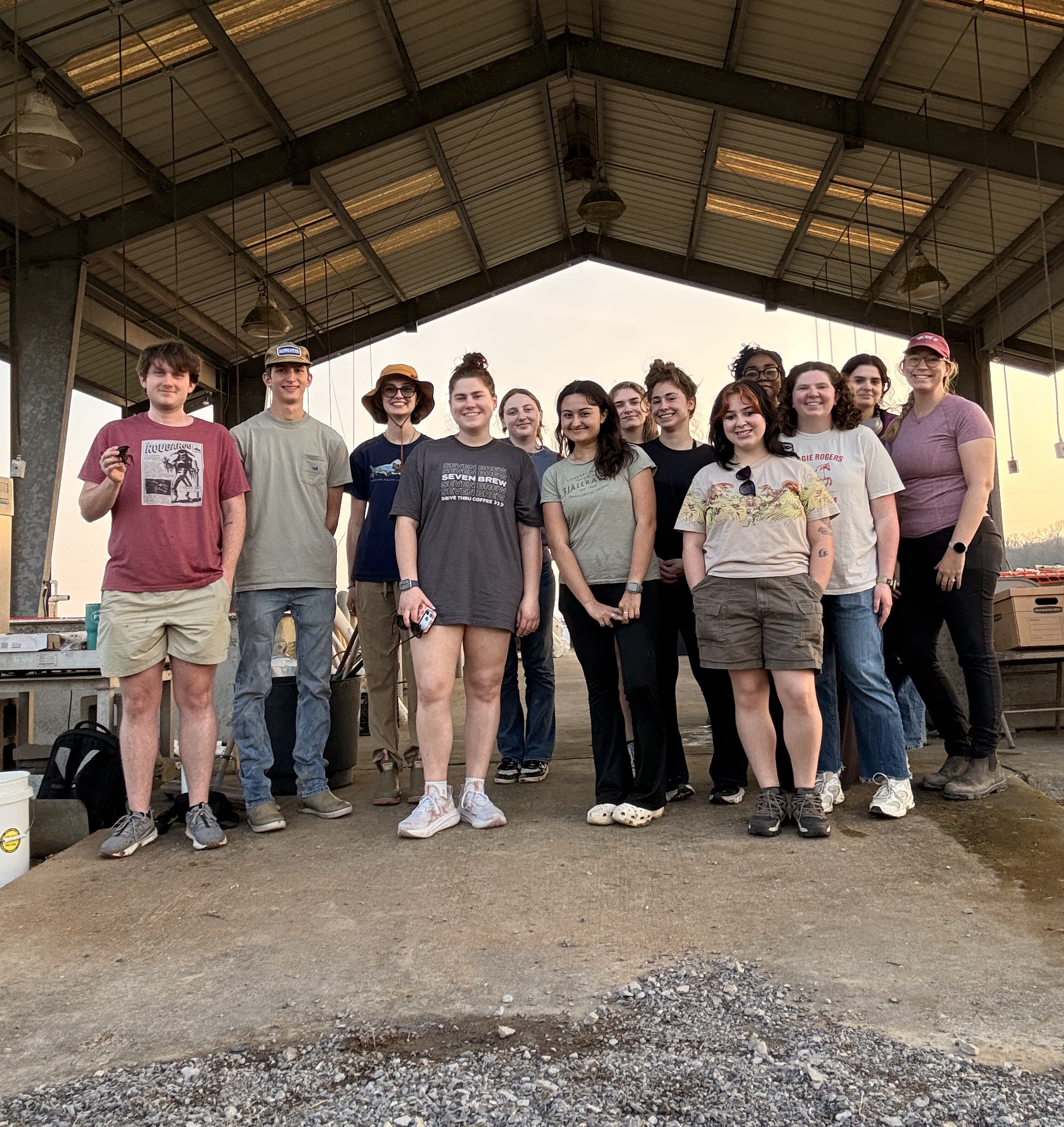
Spring 2026 Principles of Aquaculture students at the Aquaculture Research Station “Raceway Tanks”. Students spend their Friday labs participating in a crawfish research project to gain hands-on experience with husbandry and water quality management or participate in facilities management and maintenance.
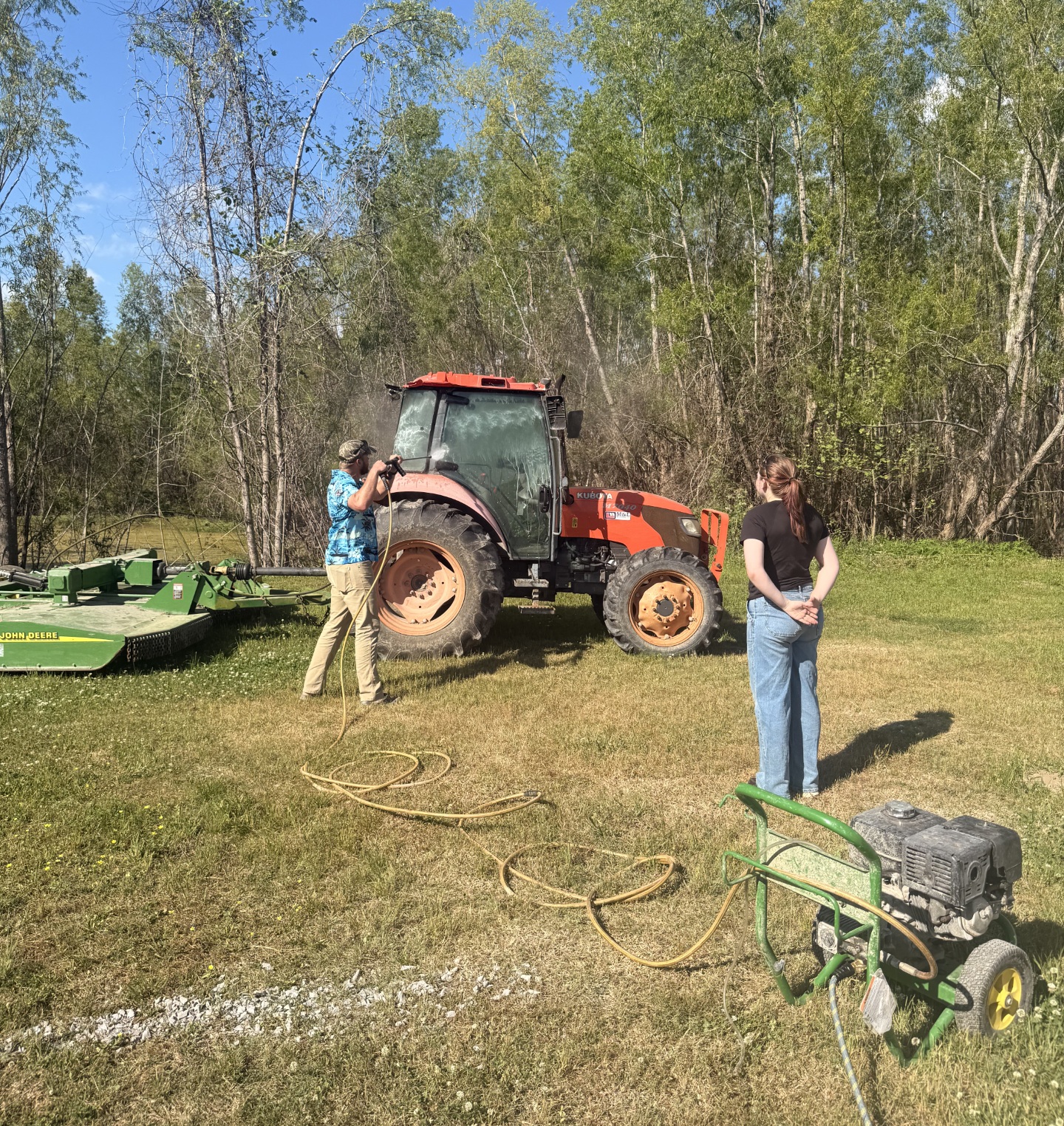
Louisiana Cooperative Fish and Wildlife Research Unit Assistant Unit Leader and School of Renewable Natural Resources Adjunct Assistant Professor, Dr. Drew Fowler, assists with training Principles of Aquaculture student, Elizabeth Plauche, on operating a pressure washer to get equipment in service for station maintenance.
A More Connected, Collaborative Future
Unlike earlier eras, Fogelman sees a future of crawfish research at LSU that isn’t built in isolation but draws on partnerships across the Southeast and around the world—bringing new ideas, shared expertise, and proven strategies into Louisiana’s fields and ponds.
“We are not alone. We have the capacity to lean on other regional experts in the Southeast who have been working in aquaculture,” she said. “We may be unique in Louisiana in the commodities that we produce, but the way to address these challenges is not unique. We follow in the footsteps of what has been done for other species.”
For example, the Chinese government has invested heavily in research and technology development for the crawfish industry, thereby increasing yields, she said. If it works there, that means there’s an opportunity to do the same here in Louisiana, she said.
“I would like to say, we are very good at producing crawfish. Our yields are very good for the style of production that we do, and including the stressors that we've had,” she said. “We are really good, but we also have room to grow, which is great.”
That sense of optimism is grounded not just in science, but in the resilience of the species itself—and the people who depend on it. Lutz, for one, said Louisiana and the crawfish are an excellent match, one likely to endure despite the challenges.
“I have confidence in the fact that we have an animal that is perfectly adapted to the conditions in our state.”
Fogelman shares the sentiment, and she sees the rejuvenation of LSU’s aquaculture program as an opportunity for great things.
She points to hard work and support from faculty and support personnel within the AgCenter, as well as from students in her Principles of Aquaculture class, who participate in her aeration project and other crawfish research.
“We also get the opportunity to offer more learning opportunities to our students, so that we're not the only ones doing this. We're also producing the next generation that can follow in our footsteps.”